Engagement with Prisons
HMDT runs a Prisons Engagement Competition across adult prisons in England and Wales.
The initiative supports learning about the Holocaust, Nazi persecution of other groups and where persecution led in Cambodia, Rwanda, Bosnia and Darfur. It also focuses on the contemporary relevance of prejudice and hatred.
This year’s competition was run in collaboration with Novus, the prison education provider, and supported by HMPPS. Across 22 participating sites, over 360 learners embraced the programme with great commitment. Learners produced thoughtful and powerful work that demonstrated meaningful engagement with Holocaust education, and also the rehabilitative impact of creative expression. New for 2026, some sites such as HMP Humber, also hosted talks with speakers from second- and third-generation Holocaust survivor organisations, creating an especially moving learning experience.
There were 10 winning entries from this year’s Holocaust Memorial Day Prisons’ Competition with prisoners responding creatively to what they learned by:
- Writing letters or poems inspired by individual life stories
- Drawing portraits or creating posters to share these stories
- Reflecting on historical artefacts through art, writing or poetry.
All entries were anonymous and judged by the Holocaust Memorial Day Trust for creativity, relevance, emotional impact and composition.
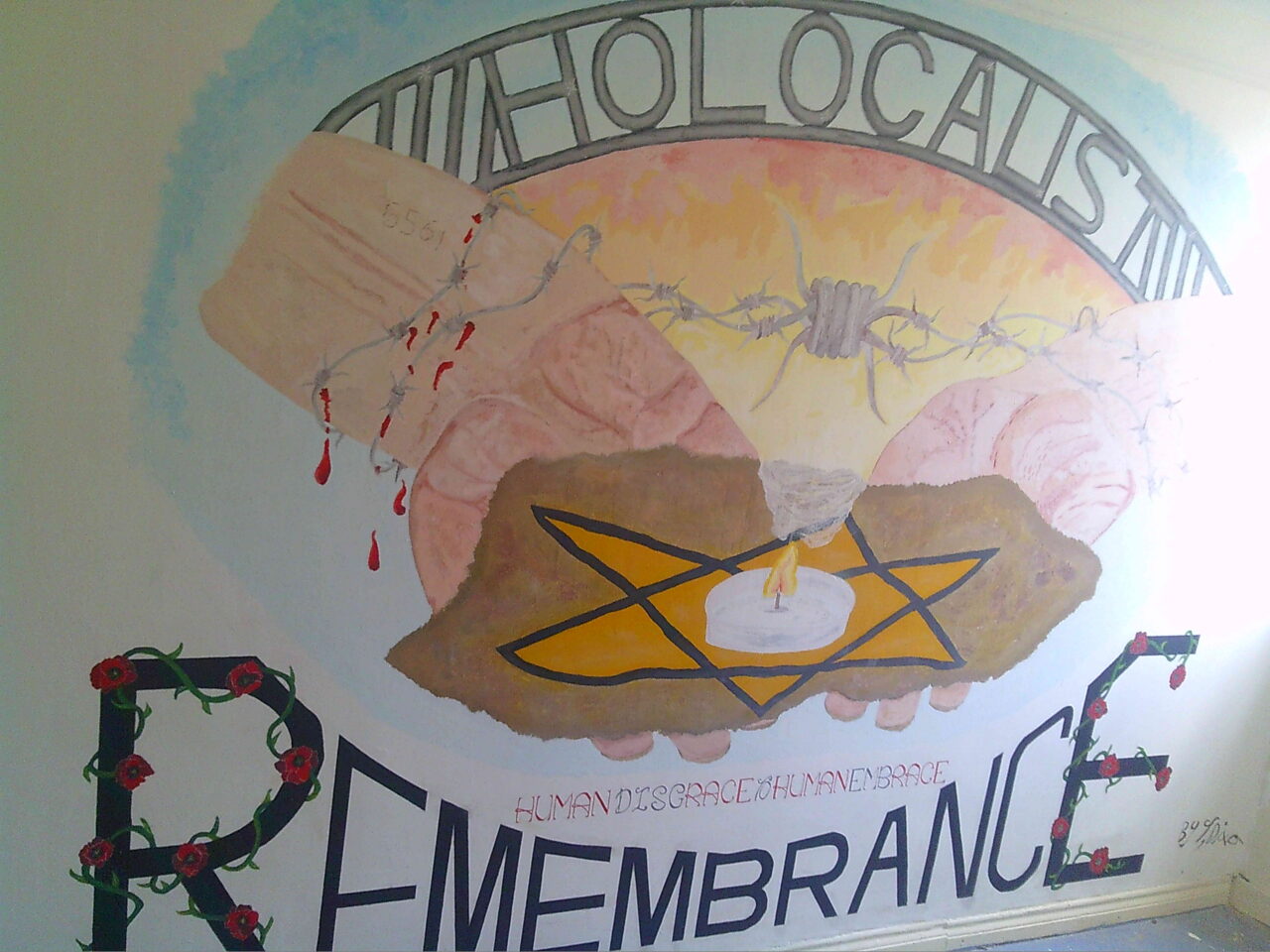
A selection of the winning entries include a series of skull shaped seed balls created by art students at HMP Kirkham; a wall sized mural created by HMP Durham (image above) and a sculptural wooden chair as a tribute to those who suffered and perished in the Krakow Ghetto by HMP Wymott.
Olivia Marks-Woldman, CEO of the Holocaust Memorial Day Trust said:
“This year, sites have engaged with the competition in creative and meaningful ways. Alongside some incredible written work and artwork, participants have also drawn on different departments and classes. These works demonstrate thought, reflection and empathy, highlighting how remembering the past helps shape a more compassionate future.”
In addition to the competition, prisons can take part in Holocaust Memorial Day in many other ways including by creating displays in libraries or communal areas; organising art, poetry and music activities; and by holding a short memorial event or reflection ceremony.