Eva-Anna Schutz
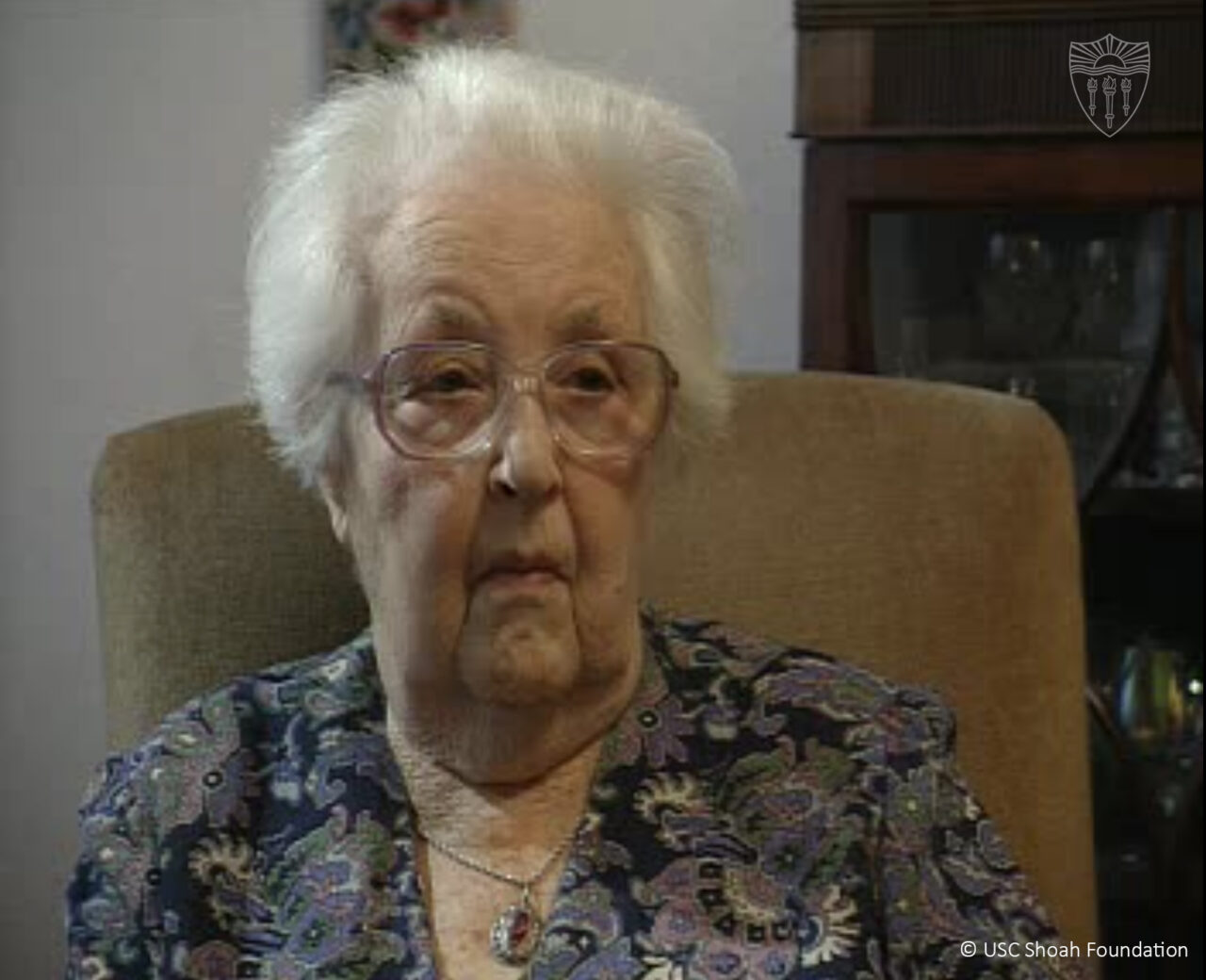
Eva-Anna Schutz survived the Holocaust and was liberated in Austria aged 36. She rebuilt her life in the UK. Eva-Anna's life story has been compiled using interviews she gave to the USC Shoah Foundation before her death. Preserving and sharing her testimony is vitally important – as she is no longer with us to recount her experiences in person.
Eva-Anna Schutz survived the Holocaust and was liberated in Austria aged 36. She rebuilt her life in the UK. Eva-Anna’s life story has been compiled using interviews she gave to the USC Shoah Foundation before her death. Preserving and sharing her testimony is vitally important – as she is no longer with us to recount her experiences in person. Any questions we have must remain unanswered, any gaps in her testimony will remain unfilled. Yet the experiences of those who lived through the Holocaust as adults give us give us insights into this history that no one else can provide. Thes insights must be learnt and shared where possible.
Born into a Jewish family in Vienna, Eva-Anna Schutz survived the Holocaust, in part through courage, determination and quick thinking, repeatedly risking her own life to protect her young son, Jan.
I had a child to look after, so I never allowed myself to give up.
Eva-Anna Schutz (née Bernstein) was born on 7 April 1909 in Allach, near Munich, and later grew up in Vienna. After her father’s death, her mother raised Eva and her brother alone. Eva remembered a happy childhood filled with books, music, and enjoying Jewish traditions with her grandparents.
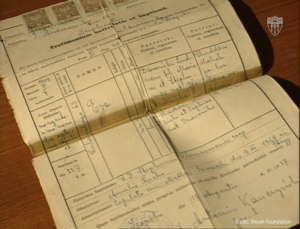
Eva-Anna’s false Baptism papers
In 1927, Eva travelled to Lvov, where she met Dr Maximilian Schutz, an X-ray specialist. They married later that year and settled in Poland, where their son, Jan, was born. Looking back, she later wondered how so many educated people had failed to recognise the danger posed by Nazism before it was too late.
Following Germany’s invasion of Poland in September 1939, Maximilian, a captain in the Polish Army Reserve, was called up for military service. Soviet forces subsequently occupied Lvov, where Eva lived with her mother and Jan. Food shortages and unemployment made daily life increasingly difficult.
In June 1941, Germany invaded the Soviet Union and occupied Lvov. Jews were forced to wear the Star of David and subjected to constant humiliation, violence and fear. Eventually, Eva, her mother and Jan were forced into the Lvov Ghetto. Conditions were overcrowded and dangerous, with families disappearing almost daily as deportations increased.
One day, Jan was rounded up with other children. Eva saw him being taken away and desperately confronted the officer in charge. The officer ordered that Jan be returned to her. It was one of several occasions on which Eva’s courage and determination saved her son’s life.
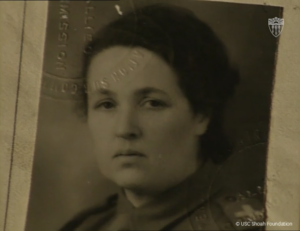
Eva-Anna in Italy after the war
As the situation worsened, false identity papers were arranged for Eva and Jan. Her mother refused to leave with them. She told Eva that she had been born Jewish and would die Jewish. It was the last time they saw one another. Later, Eva learned that her mother had been deported to Treblinka and murdered.
Eva and Jan escaped the ghetto and travelled to Warsaw using forged identity papers, relying on Eva’s language skills to avoid detection. Living under this false identity, Eva encountered Mrs Stelmachowska, a Polish woman who sheltered her in Warsaw. When Eva finally revealed that she was Jewish, Mrs Stelmachowska replied that it made no difference. Eva never forgot this act of humanity.
While living in hiding, Eva witnessed the destruction of the Warsaw Ghetto during the 1943 ghetto uprising. She remembered hearing gunfire, explosions and cries from behind the walls as German forces crushed Jewish resistance. Many members of her extended family perished during the Holocaust.
In 1944, Warsaw itself became engulfed in conflict during the Warsaw Uprising. After the uprising was defeated, civilians were forced from the city and sent to transit camps. Eva and Jan were deported for forced labour in Germany. Once again, Eva persuaded officials not to separate her from her son.
As the Third Reich collapsed, Eva and Jan seized an opportunity to escape. Travelling through a ruined and chaotic Germany, they eventually reached Austria. Hungry, exhausted and uncertain of the future, they managed to survive until liberation in May 1945.
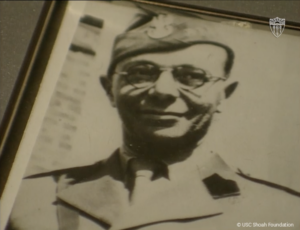
Maximillian Schutz
After the war, Eva worked with the Polish Red Cross, helping displaced children and refugees. It was here that a doctor informed her that Maximilian was alive in Britain. For years, she had not known whether her husband had survived the war. In 1947, Eva and Jan travelled to Britain and were reunited with him. Their happiness, however, was short-lived. Maximilian developed cancer and died only a few years later.
Once again, Eva was forced to rebuild her life. She worked as a housekeeper and later as a dressmaker. Jan became an engineer and eventually settled in Canada. In later life, Eva became active in a Liberal synagogue in London and remained connected to her Jewish identity. In October 1996 she gave her testimony to the USC Shoah Foundation having ensuring future generations would be able to learn from the horrors she witnessed and experienced. We thank USC Shoah Foundation for the opportunity to bring Eva’s life story to audiences across the United Kingdom.
Image Credits: All images in this life story were taken from the interview of Eva-Anna Schutz provided by the USC Shoah Foundation – The Institute for Visual History and Education. Sfi.usc.edu